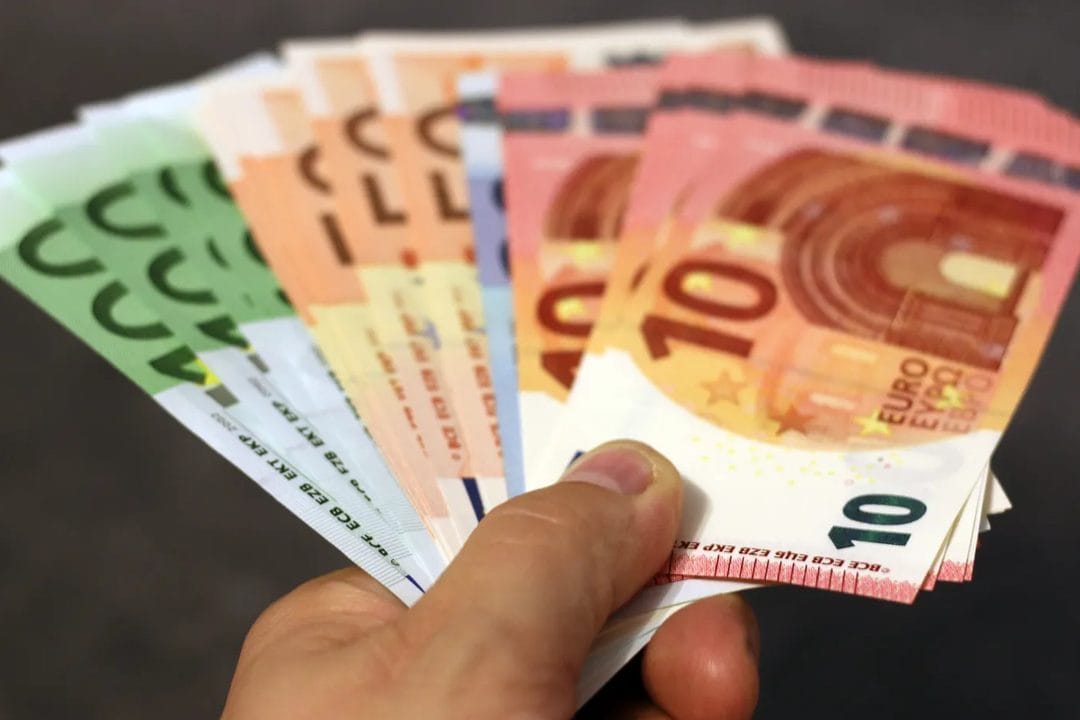
You tap your card at a beachside café in Faro, and the machine flashes up a question most people answer wrong: "Would you like to pay in pounds or euros?" Tap pounds, thinking you're doing yourself a favour by seeing a familiar currency, and you've just agreed to a conversion rate set by the café's payment provider — not your bank, not Visa or Mastercard, and definitely not in your favour. That single tap can add 4–8% to the price of your coffee, and most holidaymakers never notice, because the receipt still just shows a number in pounds. Multiply that across a fortnight of coffees, dinners, fuel and the odd museum ticket, and a family spending £2,000 on a two-week trip to Portugal could easily hand over an extra £100–£150 without a single purchase looking obviously wrong. None of it appears as a separate line item. Because it's simply baked into the exchange rate on every transaction, almost nobody notices — there's nothing on the receipt to point at.
The question that costs you before you've even ordered
That pounds-or-euros prompt has a name: Dynamic Currency Conversion, or DCC. It shows up on card machines, at cash points, and increasingly on self-service kiosks at airports and train stations right across Europe. The merchant's payment terminal — not your bank — sets the exchange rate, and it is reliably worse than the rate your card issuer would apply if the transaction simply went through in local currency instead. Consumer group Which? has flagged DCC margins running anywhere from 3% to as much as 8% above the interbank rate, depending on the terminal and the country. The fix costs nothing and takes half a second: always choose to pay in the local currency, never in pounds, whether you're standing at a card machine, an ATM, or checking out online with a foreign retailer. If a cashier asks the question out loud, say the local currency's name, not "pounds". If a screen defaults to GBP with pounds highlighted as the "recommended" option, that highlighting exists because it earns the terminal operator more money — not because it protects you.
What your bank quietly takes off the top
Avoiding DCC only solves half the problem. The other half is your own card issuer's non-sterling transaction fee, charged on every purchase and every ATM withdrawal made in a foreign currency. Barclays, HSBC, NatWest and Lloyds all apply broadly similar charges on their standard current account debit cards, typically in the region of 2.75–2.99% of the transaction value, on top of whatever exchange rate Visa or Mastercard set that day. On a £1,000 holiday budget spent entirely on a standard high-street debit card, that fee alone comes to roughly £28–£30 — invisible on any single receipt, but very real once you look at a full statement after the trip.
Credit cards from the same banks usually charge an identical percentage, and many add a separate cash withdrawal fee on top — often a flat £3–£5 or a percentage, whichever is higher — if you use them at a foreign ATM. That combination of a currency-load fee and a withdrawal fee is why using a standard high-street credit card at a cash machine abroad is one of the most expensive ways to access money on holiday, second only to a hotel bureau de change.
The fee-free cards worth packing this summer
None of this is inevitable — UK banking has changed enough in the past few years that paying these fees is now largely a choice, not a necessity. Monzo, Starling and Chase all offer current accounts with no foreign transaction fee on card spending, converting purchases at the underlying Mastercard or Visa exchange rate with nothing added on top. Monzo allows fee-free ATM withdrawals up to £200 in any rolling 30-day period, after which a 3% charge applies; Starling's equivalent allowance is £300 per 30 days before a 2% fee kicks in. Chase has built part of its reputation on generous cash withdrawal limits too, though its policy has shifted more than once since launch, so check the current terms in the app before relying on it for a large cash top-up abroad.
The better choice for most UK travellers this summer is simple: open one of these accounts before you fly (it takes about ten minutes online and doesn't mean closing your main bank account) and use it as your dedicated travel card. Keep your usual debit card as a backup in a separate bag — not because the fee-free card is likely to fail, but because losing your only working card in Lisbon on a Sunday is a genuinely bad afternoon.
Prepaid cards: convenient, but rarely the cheapest any more
Prepaid travel cards such as the Post Office Travel Money Card had a real moment about a decade ago, when they were often the only way to lock in an exchange rate before travelling and dodge card fees altogether. That advantage has mostly evaporated now that fee-free current accounts exist, and prepaid cards come with quirks of their own: some charge an inactivity fee if the balance sits unused for a few months, several charge for reloading past a certain number of top-ups, and none of them protect your main account if the card is lost, since the money is already loaded onto it rather than sitting behind your bank's usual fraud protections.
They still make sense in one specific situation: handing a teenager or a first-time traveller a fixed, capped amount of spending money without giving them access to a full bank account. Outside that use case, though, a fee-free current account card does the same job better and with fewer moving parts.
Cash still matters — just not the way you think
Card-first thinking works brilliantly in Lisbon, Barcelona or Amsterdam, where contactless payment is standard even at small bakeries and market stalls. It works far less well in rural France, small-town Greece, or anywhere a market trader expects notes and a wave of the hand at a card reader. Cash is also still the norm for tipping in several European countries, and for smaller transactions in parts of Italy, where some businesses genuinely prefer not to process card payments under roughly €10–15.
Bring some cash, but bring it the right way. Withdraw it from a foreign ATM using a fee-free card rather than exchanging pounds at a bureau, and decline the DCC prompt on the cash machine screen exactly as you would on a card terminal. Watch for machines badged Euronet or similar independent operators near tourist hotspots, since they tend to charge higher withdrawal fees and push harder on the pounds-or-euros question than bank-owned ATMs do — where possible, use a machine attached to an actual local bank instead of a freestanding one on a shopping strip.
Order your currency ahead — the airport is the last place to buy it
If you want cash in hand the moment you land, order it before you leave rather than queuing at an airport bureau de change. Airport exchange counters routinely offer rates 5–10% worse than ordering online through the Post Office, M&S Bank or a supermarket travel money service such as Sainsbury's or Tesco, largely because airport retail space is expensive and captive travellers have nowhere else to go once they're through security. Ordering online for home delivery or click-and-collect usually takes a day or two, occasionally longer around a bank holiday weekend, so the trick is doing it the week before you fly rather than the morning of. This is one of the few places where ten minutes of planning saves real money for very little effort — genuinely one of the best returns on time you'll get all summer.
The five-minute check before you fly
A little pre-trip admin avoids most of the money mistakes above. Run through this before you leave the house:
- Check whether your card charges a non-sterling transaction fee — it's usually listed under "fees and charges" in your banking app, not advertised anywhere prominent.
- If it does, open a fee-free account with Monzo, Starling or Chase at least a few working days before you fly, since some card deliveries take up to a week.
- Tell your bank you're travelling if your card provider still asks for this — most modern banks no longer block foreign spending automatically, but it costs nothing to check, and it avoids a card declined on your first coffee abroad.
- Order any cash you want in hand on landing at least a week ahead, through the Post Office, your bank or a supermarket travel money service.
- Screenshot or note your card's 24-hour lost-and-stolen number before you leave, because roaming data doesn't always cooperate exactly when you need it to.
None of these five steps takes more than a few minutes on their own, and there are other small things worth checking too — travel insurance excess, your phone's data roaming allowance, whether your passport still has six months on it — but these five catch most of what actually costs people money. Together, they're the difference between a holiday where your money quietly works for you and one where it leaks away, a percentage point at a time, on every purchase from the airport taxi to the last ice cream on the way home.