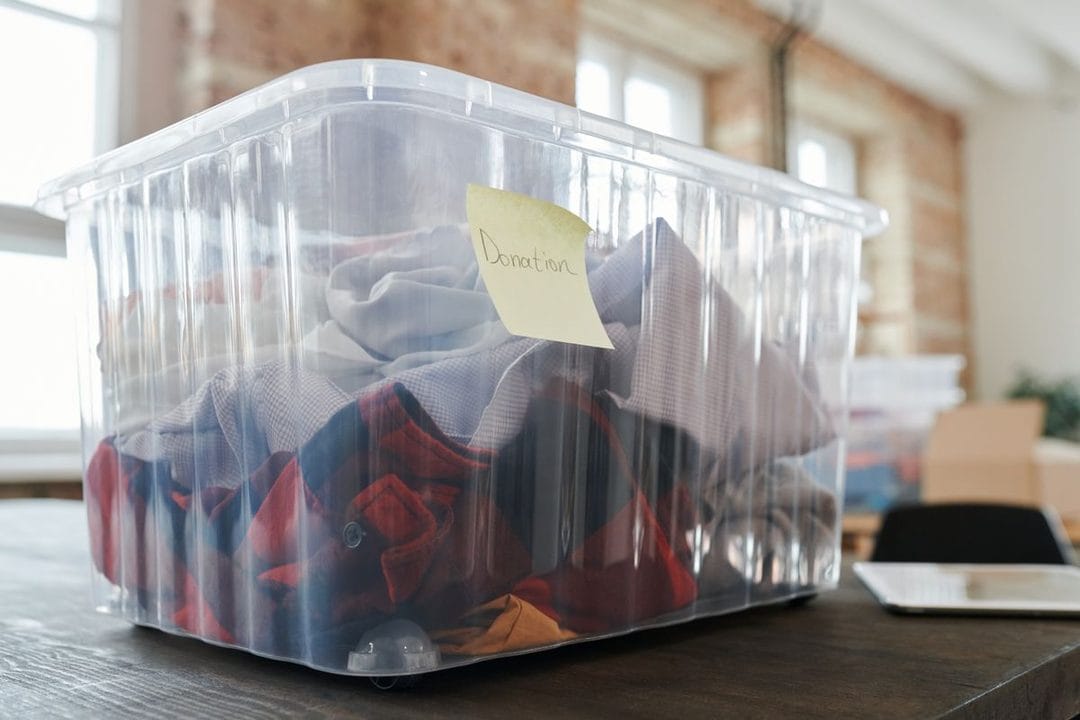
The loft hatch has been open for three weekends running, and there's a pile of old coats, a broken lamp someone insists still "just needs a new bulb", and four boxes of children's clothes that will never fit anyone in this house again. You've photographed the good stuff, listed it on Vinted and eBay, and the money is starting to trickle into your account — £8 here, £22 there, a surprisingly decent £45 for a barely-worn winter coat. Then a friend mentions, half as a joke, that HMRC "knows what you're selling now". Is that actually true, and does it mean you owe tax on a wardrobe clear-out?
The trading allowance: your first £1,000 is yours, no questions asked
Every UK taxpayer gets a trading allowance of £1,000 a year. If the total money coming in from casual selling, odd jobs or small side income stays under that figure, you don't need to tell HMRC anything and you don't owe a penny of extra tax. This isn't a loophole — it's a deliberate carve-out designed for exactly this situation: people clearing out a house, doing the odd car boot sale, or picking up small bits of freelance work without wanting to fill in a Self Assessment return over £60 of eBay sales.
Two things trip people up here. First, the £1,000 is turnover, not profit — it's what lands in your account before you subtract postage, packaging or listing fees, so a run of good sales can eat through the allowance faster than you'd expect. Second, it only applies to genuine trading or miscellaneous income. Selling your own used belongings — the coat you wore, the sofa from your old flat, the kids' outgrown school shoes — usually isn't "trading" at all in HMRC's eyes, because you're not buying things with the intention of reselling them for profit. That distinction matters more than the £1,000 figure itself, and it's the bit most Facebook posts about this topic get wrong.
Why platforms are suddenly reporting your sales
Since January 2024, digital platforms including Vinted, eBay, Depop, Airbnb and Etsy have been legally required to collect seller information and report it to HMRC once someone crosses roughly 30 sales or about £1,700 worth of transactions in a calendar year. That's the rule that spooked half of Vinted's user base when it made headlines — not a new tax, just new visibility for a tax that was, technically, always due if you were genuinely trading. HMRC has said plainly that it isn't interested in people selling unwanted possessions from their own home, and casual sellers below those reporting thresholds were never the target.
What the reporting actually changes is enforcement, not the rules themselves. Before 2024, HMRC had no automatic way of seeing that someone had, say, 400 eBay sales a year and a suspiciously large stock of "pre-loved" clothing that still had the original tags on. Now it does. If you're clearing a loft, that data flow is irrelevant to you — but if you've been quietly running a proper reselling business through a personal account to avoid registering, the anonymity you were relying on has gone.
The test HMRC actually uses: "badges of trade"
HMRC leans on a set of long-standing indicators, informally called the "badges of trade", to decide whether activity counts as a business. None of them alone is decisive, but together they build a picture:
- Did you buy the item specifically to resell it, rather than to use yourself?
- How often do you sell, and is there a repeating pattern (weekly listings, a consistent supplier, a shop-like frequency)?
- Did you do anything to increase the item's value before selling — repairing, upcycling, combining parts?
- Is the volume more than you could plausibly have accumulated through normal household use?
- Do you advertise, brand your listings, or otherwise present yourself as a seller rather than someone having a clear-out?
A single parent selling three years of outgrown school uniforms ticks none of these boxes. Someone buying job lots at car boot sales every Saturday morning and relisting them at a markup, with a consistent turnover and repeat buyers, ticks most of them — and that's a business, whatever the amount, whatever the platform.
When you genuinely need to register
Register for Self Assessment if your trading or miscellaneous income for the tax year goes over £1,000, and the activity counts as trading rather than disposing of personal possessions. The registration deadline is 5 October following the end of the tax year in which you started trading — miss it and HMRC can charge a penalty even if you owed no tax in the end, because the penalty is for late notification, not late payment. Once registered, you'll file a Self Assessment return by 31 January, and you can choose to deduct the £1,000 allowance instead of your actual expenses, whichever leaves you better off.
Don't register just because a marketplace app sent you a data notice or a "you may need to declare this income" pop-up — those messages go out on volume triggers, not on whether HMRC has actually assessed your specific situation as trading. If you're genuinely offloading your own used belongings, keep the notice for your records and move on. Do register the moment your activity starts to look like buying with intent to resell, even if the numbers still feel small; the paperwork gets harder to untangle the longer you leave it, not easier.
What to actually track, even below the threshold
Even casual sellers benefit from a basic log — not because HMRC will ask for it below £1,000, but because marketplace apps routinely delete or restrict access to your full sales history after a year or two, and you'll want your own record if a platform ever misreports your totals or you cross the threshold without noticing.
- A simple spreadsheet with date, item, sale price and platform fee is enough — you don't need accounting software for a loft clear-out
- Keep screenshots of listings for anything sold for more than about £100, in case a buyer disputes the condition later
- Note which items were genuinely yours versus bought specifically to flip, even informally, so the "badges of trade" picture stays clear in your own head
- If you do register, decide upfront whether the £1,000 allowance or actual expenses (postage, packaging, platform fees, mileage to drop-off points) gives you the better deduction — for most casual sellers it's the flat allowance, but a heavy Vinted seller paying 5% platform fees on every sale can come out ahead tracking real costs instead
One nuance worth knowing: if you and a partner jointly own something big — a sofa, a car, furniture from a shared flat — and split the proceeds, each of you only counts your own share against your own £1,000 allowance, not the full sale price. A £1,800 sofa split two ways is £900 each, comfortably under the limit for both of you, even though the total sale looks alarming on a bank statement.
The practical answer for most people
If this summer's clear-out is genuinely about reclaiming loft space rather than running a shop, the £1,000 rule and the platform reporting changes almost certainly don't apply to you in any way that costs money. Keep rough records, don't panic at an automated notice from Vinted or eBay, and treat the trading allowance as what it is — a generous buffer built specifically so that selling your own unwanted things never turns into a tax headache.